
Shopify is a great ecommerce platform, but it isn’t the right one for every store. Transaction fees, monthly app bills, a fixed URL structure and the difficulty of moving away later push many merchants to look at the top Shopify competitors. The good news: there are plenty of strong Shopify alternatives, and some of them beat Shopify on cost, flexibility or SEO control.
In this guide we compare the best Shopify competitors head to head, including Shopify vs WooCommerce, Shopify vs Etsy, Shopify vs Squarespace, Shopify vs Wix and Shopify vs BigCommerce, then cover ten more options for specific business models. If you’re new to the platform, start with our explainer on what Shopify is and the biggest brands using it.
- Want full control and the best SEO flexibility? WooCommerce on WordPress.
- Scaling and want fewer apps? BigCommerce.
- Design-first brand with a small catalog? Squarespace.
- Beginner who wants the fastest, cheapest launch? Wix.
- Handmade or vintage seller who needs built-in traffic? Etsy (ideally alongside your own store).
Why look beyond Shopify?
Shopify earns its popularity: it’s hosted, fast to launch and has a huge app store. Industry estimates of its share vary by method. One recent roundup puts it at about 32% of US ecommerce, while an agency guide cites a higher global figure, so treat any single number as approximate. But a big market share doesn’t make it the best fit for your store. The four reasons merchants most often start shopping around are:
- Costs that climb. The entry plan looks cheap, then you add a premium theme, paid apps and, if you don’t use Shopify Payments, an extra transaction fee on every order.
- App dependence. Features such as advanced filtering, B2B pricing or subscriptions often need a paid app, and each app adds a monthly charge.
- Less structural SEO control. Shopify’s URL patterns are fixed, and you can’t restructure them the way you can on WordPress. Shopify SEO can still perform well, but advanced teams usually want more control (see our guide to the best platform for SEO).
- Lock-in. Themes and apps aren’t portable, so leaving later means rebuilding the design and re-wiring integrations.
If you want to see what a mature Shopify store looks like first, browse the most successful Shopify stores, then come back and decide whether the platform really matches your plans.
Shopify competitors at a glance
| Platform | Type | Best for | Platform transaction fees | Typical starting cost* |
|---|---|---|---|---|
| Shopify (baseline) | Hosted | All-round DTC stores | Extra fee if you don’t use Shopify Payments | About $29/mo |
| WooCommerce | Self-hosted plugin | Control, SEO, content-led stores | None (gateway fees only) | Free plugin + hosting |
| BigCommerce | Hosted | Scaling brands, B2B | None on any plan | ~$29–$39/mo |
| Squarespace | Hosted builder | Design-led small shops | Up to 2% on lowest commerce plan | ~$19–$36/mo |
| Wix | Hosted builder | Beginners, quick launches | None on Business plans and above | From ~$17/mo |
| Etsy | Marketplace | Handmade, vintage, craft supplies | Listing + transaction + payment fees | No monthly fee for basic selling |
*Prices are drawn from vendor pricing pages and recent third-party reviews; plans, billing terms and fees change often, so confirm on each official site (for example Shopify pricing) before you commit.
How we compared the platforms
A low monthly price means little if the platform costs you search traffic or forces a rebuild in two years. We scored every option on the same seven points:
- Total cost of ownership: plan + apps/plugins + hosting + payment fees + developer time.
- SEO control: editable URLs, metadata, schema, sitemaps and page speed. Google’s own ecommerce SEO documentation is the benchmark we follow.
- Ease of use: how fast a non-technical team can run the store day to day.
- Scalability: how it handles more orders, products and traffic.
- Ecosystem: apps, themes, plugins and integrations available without custom code.
- Customization: from theme tweaks to fully custom builds.
- Selling channels and international support: multi-currency, multi-language and marketplace reach.
Shopify vs WooCommerce
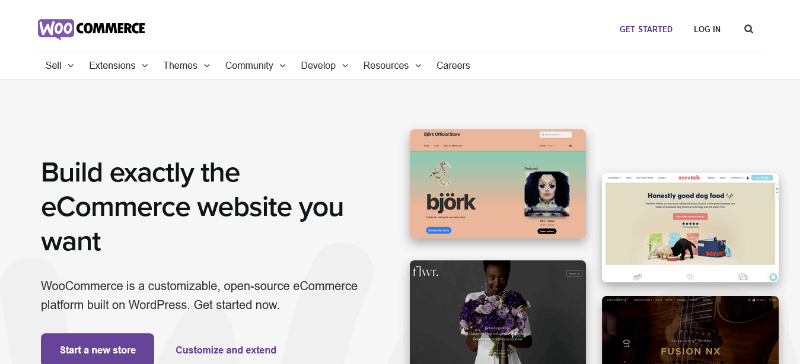
WooCommerce is the most-used ecommerce software after Shopify, and it works very differently. It’s a free, open-source plugin that turns a WordPress site into a store, so you own the hosting, the data and every template. (New to it? Read what WooCommerce is and how it works.)
Where WooCommerce wins
- No platform transaction fees, only your payment gateway’s charges
- Full control of URLs, templates and content structure; works with SEO plugins
- Thousands of plugins and themes, including free WooCommerce themes
- No staff-account caps and no lock-in to one vendor
Where Shopify wins
- Hosting, security and updates are handled for you
- Faster setup, with one dashboard and one bill
- Built-in checkout that is already tuned for conversion
- Less technical upkeep for small teams
The real cost. The WooCommerce plugin is free, but a serious store still pays for quality hosting (see the fastest WooCommerce hosting), a theme, extensions and occasional developer help. Start with our list of essential plugins for WooCommerce and keep an eye on inventory management as you grow. You also take on security, so bookmark the WordPress security checklist.
Want proof it scales? See these successful WooCommerce sites and WooCommerce website examples. To lift conversions, a live social-proof pop-up such as our AI Sales Notifications for WooCommerce plugin is an easy win.
Shopify vs BigCommerce
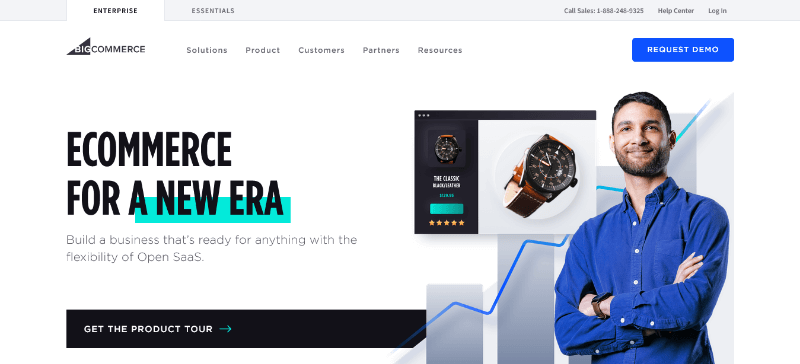
BigCommerce is the closest like-for-like rival: a fully hosted platform for growing and mid-market brands. Its main pitch is that it builds in features Shopify typically leaves to paid apps, such as advanced product options, multi-currency selling and bulk pricing, and it charges no additional platform transaction fees on any plan, whichever payment provider you use.
- Pros: more native features, no extra transaction fees, strong B2B tools, solid SEO controls out of the box.
- Cons: a much smaller app and theme marketplace than Shopify, plan tiers tied to sales thresholds, and a steeper learning curve for beginners.
Shopify vs Squarespace
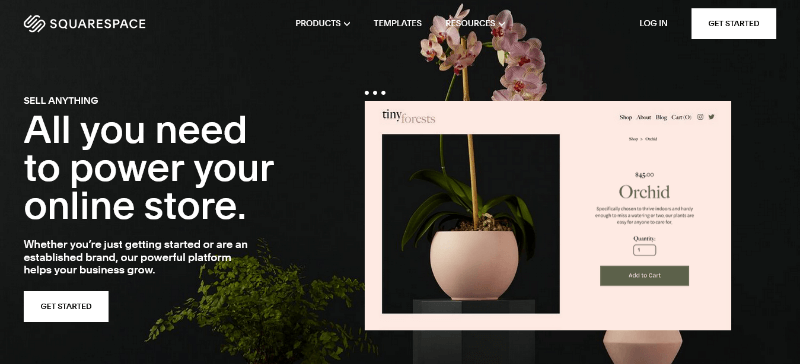
Squarespace began as a website builder and added commerce later. Its templates are among the most polished around, the editor is friendly, and built-in blogging, email campaigns and scheduling make it popular with photographers, artists, studios and boutique brands.
- Pros: beautiful templates, clean editor, bundled hosting and marketing tools, good for digital products and light selling.
- Cons: smaller app ecosystem, weaker multi-currency and inventory depth, and a transaction fee on the lowest commerce plan.
Shopify vs Wix
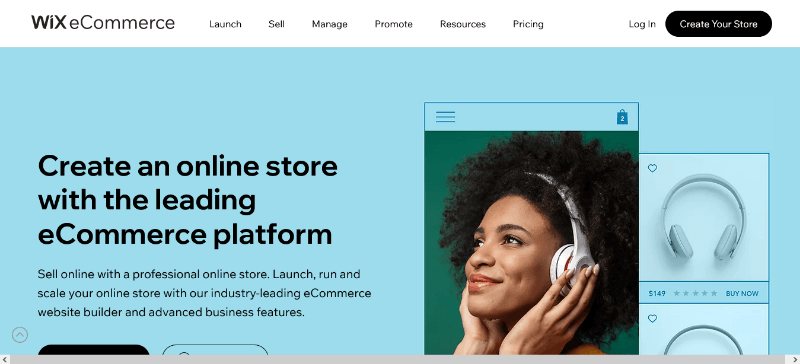
Wix offers a free-form drag-and-drop editor, hundreds of templates and AI-assisted site creation, which is why beginners can have a store live in an afternoon. Entry pricing is lower than most rivals, and the builder bundles marketing, booking and other extras. Read our full guide, what is Wix, for a deeper breakdown.
- Pros: very easy, flexible page layout, low starting price, lots of templates.
- Cons: ecommerce features are thinner than Shopify’s, advanced inventory needs add-ons, and it’s a hosted system, so your data and design live on Wix.
Shopify vs Etsy
This isn’t a like-for-like comparison. Etsy is a marketplace with ready-made buyers looking for handmade, vintage and craft items; Shopify is software for building your own branded store. Etsy typically charges a listing fee, a transaction fee and payment-processing fees on each sale (see Etsy’s fee page for the current rates), while Shopify charges a monthly plan plus payment fees.
- Choose Etsy to test a handmade idea quickly, tap existing search demand and skip the marketing setup.
- Choose Shopify to build a brand, control customer relationships, run email and ads, and avoid being one of thousands of lookalike listings.
- Do both: many sellers use Etsy as a discovery channel and send repeat customers to their own store.
10 more Shopify alternatives for specific business models
The platforms above cover most searches for the best Shopify alternatives. These ten serve narrower needs. We removed a few legacy options from our earlier list that no longer fit the modern market, so check any vendor’s current status before you sign up.
1. Square Online
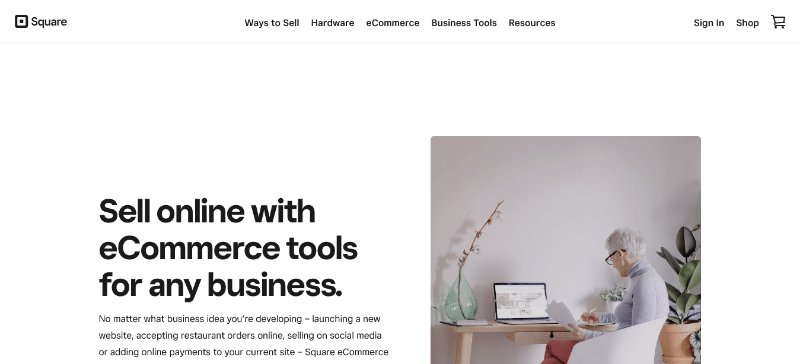
Built by the payments company Square, it’s a good fit if you also sell in person and want inventory synced with your point-of-sale system. A free tier exists for basic selling, with per-transaction fees. Visit Square Online.
2. Ecwid
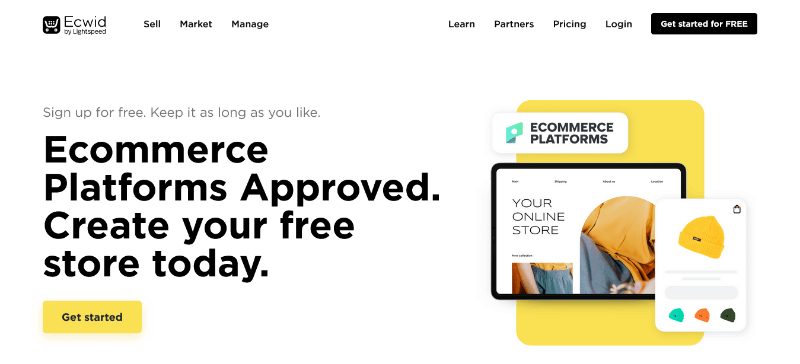
Ecwid isn’t a full platform; it’s a store you embed into a website you already have (WordPress, Wix, Squarespace and more). Ideal when you don’t want to migrate. It offers a limited free plan. Visit Ecwid.
3. Sellfy
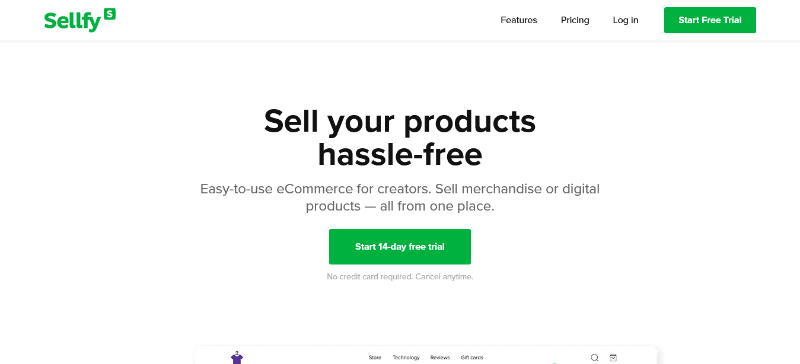
Sellfy focuses on digital downloads, print-on-demand and subscriptions for creators, and you can launch quickly with embeddable buy buttons. Visit Sellfy.
4. Big Cartel
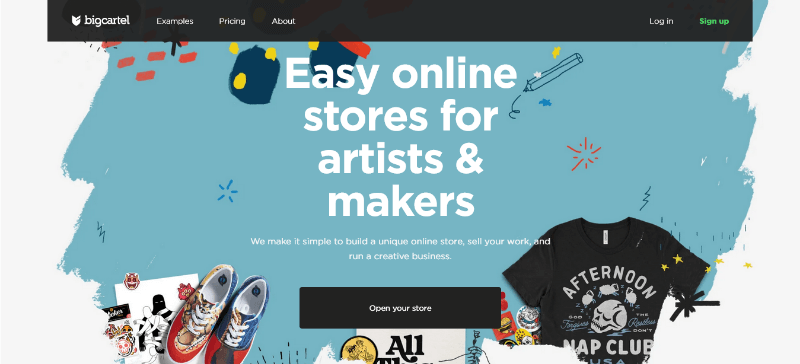
Made for artists, bands and small makers with a limited catalog. It has a free tier with a small product cap and simple paid plans. Visit Big Cartel.
5. Adobe Commerce (Magento)
The enterprise heavyweight, with deep customization, multi-store and B2B features. The open-source edition is free to license, but implementation and hosting costs are high and it needs a developer team. Learn how it handles merchandising in our guide to shop by brand in Magento.
6. Shift4Shop
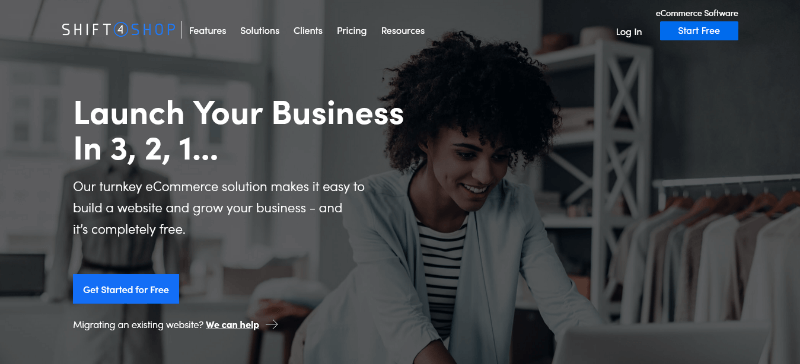
A hosted platform that bundles many features into the core product instead of apps. Pricing and free-plan conditions have changed over the years, so verify the current terms. Visit Shift4Shop.
7. OpenCart
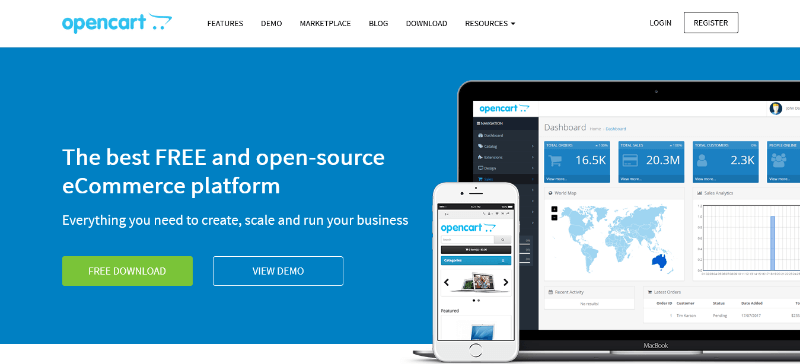
A lightweight open-source cart popular with developers, with extensions built just for commerce. According to BuiltWith, hundreds of thousands of sites have used it. It needs technical upkeep like any self-hosted platform. Visit OpenCart.
8. Pixpa

An all-in-one site, blog, client gallery and store builder aimed at photographers, designers and other creatives. Visit Pixpa.
9. Webflow
A visual builder that outputs clean code, favored by designers who want precise control over layout and animation, with built-in CMS and hosting. Best for bespoke, design-heavy stores with modest catalogs.
10. FluentCart
A newer WordPress-native store plugin from the Fluent family that positions itself on zero transaction fees and tight integration with other Fluent tools. It’s still a young product, so test it on a staging site before moving a live store. If you’re comparing WordPress-based options, also see alternatives to WooCommerce Storefront.
How to choose the right Shopify alternative
Use this short checklist before you decide:
- Where will your traffic come from? Content and organic search favor WooCommerce or Shopify; marketplace demand favors Etsy.
- How technical is your team? No developer? Stay hosted (Shopify, BigCommerce, Wix, Squarespace).
- What will you sell? Digital, handmade, B2B and subscriptions each favor different tools.
- What will it really cost in year two? Add plan, apps, hosting, themes, payment fees and help.
- How easy is it to leave? Open platforms like WordPress make future moves simpler.
Switching from Shopify: a safe checklist
- Export everything: products, customers, orders, blog posts, redirects and discount codes.
- Build on a staging site or temporary domain and test checkout, taxes and shipping.
- Map your URLs: create 301 redirects from old product and collection URLs to the new ones to protect rankings.
- Recreate integrations: payments, email, analytics, tracking pixels and shipping tools.
- Launch in a low-traffic window, then monitor Search Console, 404s and conversion rate for several weeks.
- Harden the new store. If you move to WordPress, apply our security checklist and consider a WordPress development agency for complex migrations.
Final thoughts on the top Shopify competitors
There is no single best Shopify alternative, only the one that fits your product, budget and skills. WooCommerce gives the most control, BigCommerce the most built-in tools, Squarespace the best design polish, Wix the easiest start and Etsy the fastest route to ready-made buyers. Shopify remains an excellent default, so only switch when a competitor clearly solves a problem you actually have.
For deeper research, continue with our ecommerce platforms comparison, the WooCommerce guide and the best dropshipping WordPress themes.
Frequently asked questions
Who is Shopify’s biggest competitor?
By number of stores, WooCommerce is usually named as the biggest rival. For a direct hosted-platform comparison, BigCommerce is the closest. At enterprise scale, Adobe Commerce and Salesforce Commerce Cloud compete with Shopify Plus.
Is WooCommerce better than Shopify?
It depends. WooCommerce offers more control, no platform transaction fees and strong SEO flexibility, but you manage hosting, updates and security. Shopify is easier to run and faster to launch.
Is Shopify or Etsy better for beginners?
Etsy is faster to start if you sell handmade or vintage goods because buyers already visit the marketplace. Shopify is better when you want your own brand, customer list and long-term control.
Is Wix or Squarespace better than Shopify?
For small stores with simple needs, both can be easier and cheaper. For large catalogs, multi-currency selling and heavy growth, Shopify is stronger.
Is BigCommerce cheaper than Shopify?
Entry prices are similar. BigCommerce can work out cheaper when you use third-party payment providers because it adds no platform transaction fees, but total cost depends on your apps, plan limits and payment setup.
Is there a free alternative to Shopify?
WooCommerce, OpenCart and Magento Open Source are free to download, but you still pay for hosting, extensions and maintenance. Some hosted tools such as Square Online and Big Cartel have limited free plans.