Quick answer: the best food blog WordPress themes are fast, mobile-first, and ready for recipe cards, ingredient lists, ratings and structured data. Our top picks are TinySalt for a ready-made food blog, Foodica for a recipe-first layout, and Kadence or Astra if you want a flexible, free-to-start base.
Great food photography gets people to stop scrolling. A great food blog WordPress theme is what makes them stay, find the recipe, cook it, and come back next week. The wrong theme does the opposite: slow image loading, a cramped recipe layout, and a design that hides your best dishes.
This guide compares 15 of the best WordPress themes for food blogs, from full recipe-site templates to lightweight multipurpose themes that work beautifully with a recipe plugin. We also cover what to look for, how to set up your food blog WordPress website step by step, how to keep hosting costs low, and what to check if your readers are in Germany, Austria, Switzerland or France.
What Makes a Great Food Blog WordPress Theme?
Before you scroll through demos, know what separates a pretty template from a theme that actually grows a food blog. These are the features we checked for every theme in this list.
- Recipe card support. Ingredients, steps, prep and cook time, servings, nutrition, ratings and a print button. Many themes include their own recipe feature; others work with a plugin such as WP Recipe Maker.
- Speed. Food blogs are image-heavy. A good theme loads lean code, supports lazy loading and WebP, and keeps Core Web Vitals healthy. See our guide to the fastest WordPress themes.
- Mobile-first layout. Most readers open recipes on a phone, often in the kitchen with messy hands. Large tap targets and a clean single-column recipe view matter.
- Search and filters. Readers want to find “vegan dinner under 30 minutes” in seconds. A recipe index with category, diet and cuisine filters is a real advantage.
- Structured data. Recipe schema helps your dishes appear as rich results with photo, rating and cooking time in Google.
- Block editor or builder compatibility. Gutenberg, Elementor or the Customizer, whichever you prefer. Read more about WordPress block themes.
- Monetization options. Ad-ready widget areas, affiliate-friendly layouts, newsletter forms and, if you want, a shop through WooCommerce.
- Translation readiness. Important if you publish in German, French or several languages. More on this in the DACH and France section.
Quick Comparison: Best WordPress Themes for Food Blogs
| Theme | Best for | Type | Builder / editor |
|---|---|---|---|
| Food Blogger Themes collection | Browsing many food blogger designs | Curated list | Various |
| CheerUp | Magazine-style food and lifestyle blog | Premium | Customizer |
| TinySalt | Personal food blog and recipe site | Premium | Built-in options |
| Personal CV / Resume | Chef or food creator personal brand page | Premium | Elementor-friendly |
| Especio | Clean, Gutenberg-based food blog | Premium | Gutenberg |
| Superfood | Organic food and health products | Premium | Page builder |
| Ecodetox | Healthy food and wellness blog | Premium | Elementor |
| Foodica | Recipe-first food blog | Premium | Customizer / blocks |
| Astra | Fast, flexible food blog WordPress template | Free + Pro | All major builders |
| Kadence | Block-based custom designs | Free + Pro | Gutenberg |
| GeneratePress | Maximum speed and clean code | Free + Premium | Gutenberg / builders |
| Blocksy | Modern design plus WooCommerce | Free + Pro | Gutenberg |
| Neve | Lightweight starter sites | Free + Pro | Gutenberg / Elementor |
| OceanWP | Large demo library | Free + Premium | Elementor and others |
| Divi | Visual drag-and-drop design | Premium | Divi Builder |
The 15 Best Food Blog WordPress Themes
Each theme below includes what it does best and who should pick it. Prices and features change often, so always check the live demo and the latest details on the seller’s page before you buy.
1. Food Blogger WordPress Themes (Athemeart Collection)
If you want to see many designs side by side before committing, start with our curated food blogger WordPress themes collection. It gathers layouts for recipe blogs, cooking diaries, restaurant reviewers and home-baking sites, so you can compare homepage styles, header layouts and recipe pages quickly.
Best for: beginners who are still deciding on a style. Why we like it: one place to compare many food blog WordPress design ideas before choosing.
2. CheerUp

CheerUp is a popular blog and magazine theme with a cheerful, editorial look. Its multiple homepage layouts, flexible post styles and strong typography suit food bloggers who publish stories, restaurant reviews and seasonal roundups alongside recipes.
Best for: magazine-style food and lifestyle blogs. Keep in mind: if you need a deeply structured recipe card, pair it with a recipe plugin.
3. TinySalt
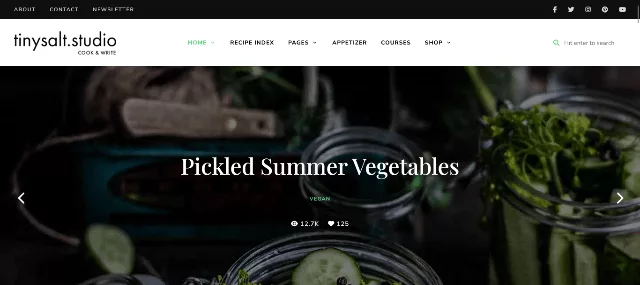
TinySalt is built specifically as a personal food blog WordPress theme. It offers several modern homepage layouts, many post styles, a recipe feature with cooking steps, ratings and print options, and a recipe index with search and filters. That combination makes it one of the most complete food recipe themes for WordPress in this list.
Best for: bloggers who want a finished food site with minimal setup. Why it stands out: a dedicated recipe index, which helps readers browse hundreds of dishes.
4. Personal CV / Resume

Not every food website is a recipe archive. If you are a private chef, food stylist, cookbook author or food photographer, the Personal CV Resume theme gives you a clean one-page profile with an about section, services, a portfolio grid and contact details. It works well as your personal brand home, with a blog for recipes added on top.
Best for: chefs and food creators who need a personal brand website more than a recipe database.
5. Especio
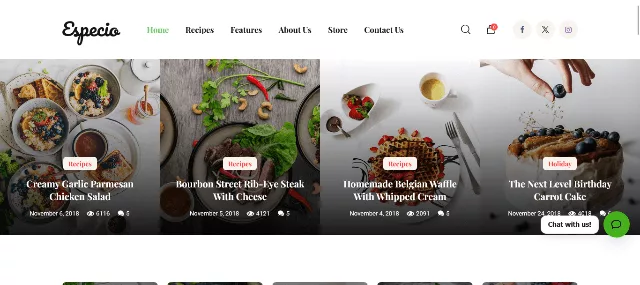
Especio is a Gutenberg-ready food blog theme. Because it is built around the native block editor, you can design recipe posts and landing pages without a heavy page builder, which keeps pages lighter and easier to maintain.
Best for: bloggers who like the WordPress block editor and want a clean, modern food blog WordPress template.
6. Superfood
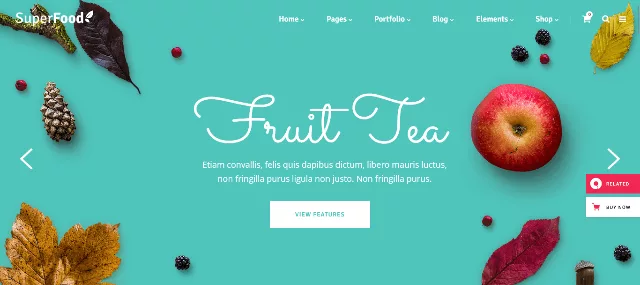
Superfood is a vibrant theme aimed at organic food and health products. It suits a food blog that also sells something: healthy snacks, spice blends, meal plans or supplements. The bright, fresh styling fits wellness and clean-eating topics.
Best for: health-focused food blogs with a small shop. For store features, see our list of WooCommerce restaurant ordering plugins.
7. Ecodetox
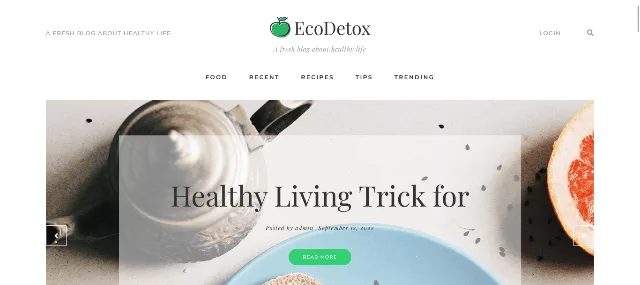
Ecodetox is a healthy food blog theme built for Elementor. Drag-and-drop editing makes it easy to adjust sections, swap images and create new pages for diets, juices, salads and wellness tips.
Best for: healthy-eating, vegan and detox blogs. Elementor users may also like our guide to the best Elementor template kits.
8. Foodica
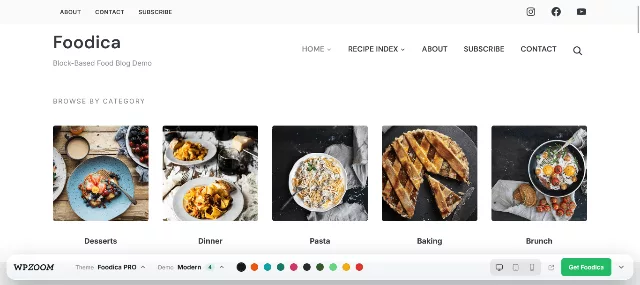
Foodica from WPZOOM is a recipe-focused theme designed for food bloggers. It is designed to work with the WPZOOM Recipe Card plugin, so ingredients, directions and nutrition details sit in a tidy, readable block with schema support.
Best for: bloggers who want a clear, recipe-first food recipe theme for WordPress.
9. Astra
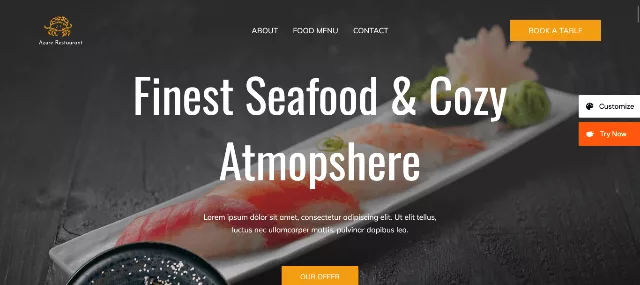
Astra is one of the most widely used WordPress themes. It is lightweight, works with Gutenberg, Elementor and other builders, and offers a Starter Templates library that includes food and restaurant-style designs. The free version is enough to launch a good-looking food blog WordPress website.
Best for: anyone who wants flexibility, speed and a large community. Looking for something different? See these Astra theme alternatives.
10. Kadence

Kadence offers a generous free version, starter templates and a block toolkit that lets you build custom recipe archives, hero sections and category grids without code. It is fast and gives you strong control over colors, fonts and layout.
Best for: bloggers who want a unique food blog WordPress design built from blocks. Compare options in our Kadence theme alternatives guide.
11. GeneratePress

GeneratePress is known for clean code and excellent speed. It does not come with a food-specific design, but with a recipe plugin and a few well-chosen fonts and colors it becomes a very fast food blog WordPress theme, which pays off when you have hundreds of image-rich recipes.
Best for: speed-focused bloggers and developers who care about Core Web Vitals.
12. Blocksy
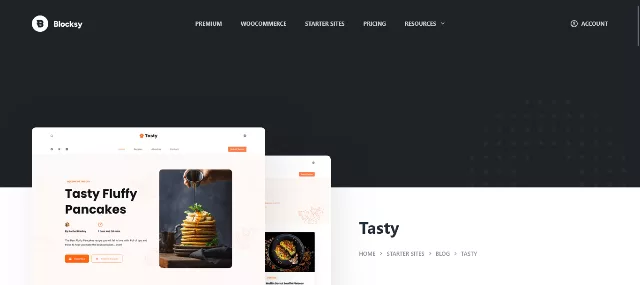
Blocksy combines a modern look with deep Gutenberg support, header and footer builders, and good WooCommerce integration. That makes it a strong choice if your food blog grows into a shop for cookbooks, spices or kitchen tools.
Best for: modern food blogs with an online store.
13. Neve
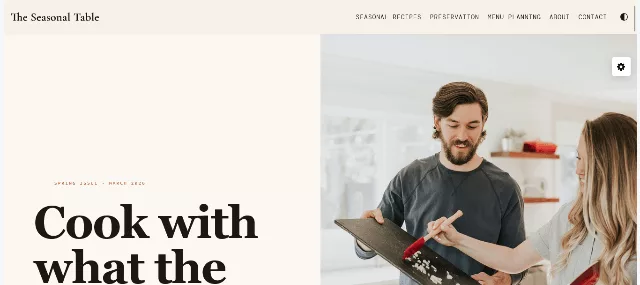
Neve is a lightweight, mobile-first theme with ready-made starter sites and a simple setup. It is friendly to beginners and works with Gutenberg and Elementor.
Best for: first-time bloggers who want a quick, clean start.
14. OceanWP

OceanWP offers a large library of demos, extensive customization and strong Elementor compatibility. You can import a demo that fits cooking, restaurants or healthy living, then change colors, fonts and layouts to match your brand.
Best for: bloggers who like starting from a full demo and tweaking it.
15. Divi
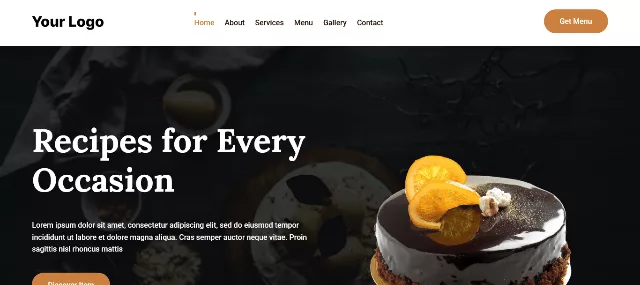
Divi includes a visual drag-and-drop builder and a large collection of layout packs, which makes it easy to design custom food blog pages exactly the way you imagine them. It is heavier than minimal themes, so pair it with good caching and optimized images.
Best for: design-driven bloggers who want full visual control. If you customize it, create a child theme in WordPress first so updates do not overwrite your changes.
How to Choose the Right Food Blog WordPress Template
With this many options, use these steps to narrow your choice.
- Define your content. A recipe database needs filters and recipe cards. A story-driven blog needs strong typography and large images. A chef brand needs a portfolio and booking section.
- Test the demo on your phone. Open the live preview on mobile and check how the recipe looks and how quickly it loads.
- Check how recipes are built. Does the theme include recipe cards or rely on a plugin? Can you add nutrition facts, ratings and a print button?
- Look at the editing method. Choose the builder you will enjoy using for years: Gutenberg, Elementor or the Customizer.
- Review support and updates. A theme that has not been updated recently is a security and compatibility risk.
- Plan for growth. If you may add a shop, a membership or multiple languages later, pick a theme that supports them now.
Not sure about the basics yet? Our guide on how to start your own blog walks you through domain, hosting and your first post. For styling inspiration beyond food, browse these best WordPress website examples.
Recipe Plugins That Pair Well With Your Theme
Many themes, especially lightweight multipurpose ones, rely on a plugin for the recipe itself. A good recipe plugin gives you:
- Structured recipe cards with ingredients, steps, times, servings and nutrition
- Recipe schema markup for Google rich results
- Star ratings and reader comments
- Print and jump-to-recipe buttons
- Unit conversion (metric and US units), which matters for German, Swiss and French readers who cook with grams and millilitres
Popular options include WP Recipe Maker and the recipe card block from WPZOOM. Add a social plugin to display your cooking photos too; see our roundup of Instagram plugins for WordPress.
How to Build Your Food Blog WordPress Website in 7 Steps
- Pick a domain and hosting. Choose a short, memorable name and a fast host. See low-cost hosting below.
- Install WordPress. Most hosts offer one-click installation.
- Install your theme. Follow our guide to install a WordPress theme, then import the demo content.
- Add a recipe plugin. Set your default units, nutrition fields and rating style.
- Create core pages. Home, About, Recipes, Contact and your legal pages.
- Optimize your images. Compress photos, use WebP and add descriptive alt text to every dish.
- Publish and promote. Share on Pinterest, Instagram and your newsletter, and build a content calendar around seasons and holidays.
Want to see what other food sites do well? Browse our posts on foodie WordPress themes, kitchen WordPress themes and sweet cake WordPress themes. If your blog grows into a restaurant, cafe or delivery business, these guides help too: coffee shop themes, catering themes and food delivery themes.
SEO Tips for Recipe and Food Blogs
The theme is the foundation, but these habits are what move a food blog up the rankings.
- Write for one clear search intent per post. “Easy vegan lasagna” and “vegan lasagna history” are different articles.
- Use recipe schema. Follow Google’s recipe structured data guidelines so your cards can appear with photo, rating and time.
- Write helpful intros, not essays. Give the answer fast, add a jump-to-recipe link, then share your story.
- Compress and name images well. Descriptive file names and alt text help image search, where many food visitors begin.
- Test speed. Run your best recipes through PageSpeed Insights and fix the largest images first.
- Link related recipes. Internal links keep readers on your site and spread authority between posts.
- Use an SEO plugin. Our Rank Math vs Yoast SEO comparison helps you pick.
Ranking in Germany, Austria, Switzerland and France
If your readers are in the German-speaking countries (DACH) or France, a few extra steps make your food blog WordPress website more trustworthy and easier to find.
Publish in the local language
Search behavior differs by language. German readers search for terms such as Food-Blog WordPress Theme and Rezepte Theme WordPress, while French readers look for thème WordPress blog culinaire or thème WordPress recettes. Writing real, native content (not a rough machine translation) performs best. Pick a translation-ready theme and a multilingual plugin such as WPML, Polylang or TranslatePress. Our list of multilingual WordPress themes shows what to look for.
Use hreflang and clear URLs
Mark each language and country version with hreflang tags (for example de-DE, de-AT, de-CH, fr-FR and fr-CH) so Google shows the right page to the right reader. Use a clean structure such as /de/ and /fr/.
Use local measurements and ingredients
Offer metric units (grams, millilitres, degrees Celsius) by default, and mention local ingredient names where they differ: for example Quark in Germany, Mehl Type 405 or farine T55. Locally relevant details improve both ranking and reader trust.
Legal and privacy basics
Readers and search engines in these markets expect a professional, privacy-aware site. In general, plan for a legal notice (Impressum in Germany and Austria, mentions légales in France), a privacy policy, and a consent banner for cookies and tracking. Host fonts locally instead of loading them from Google’s servers, because German courts have ruled against embedding Google Fonts without consent. Switzerland has its own data protection law, so check the requirements if you target Swiss readers. This is general information, not legal advice; confirm the details with a qualified professional.
Choose a server close to your audience
Hosting in a European data center improves load time and simplifies data protection. See the next section for budget options.
Low-Cost WordPress Hosting for Food Blogs
Food blogs load many photos, so cheap hosting should still offer SSD or NVMe storage, caching, free SSL and a European data center option. You do not need an expensive plan to start; you can upgrade as traffic grows.
- What to look for: free SSL, daily backups, built-in caching, PHP 8+, a staging site and fast support.
- Budget-friendly providers to compare: Hostinger and IONOS, which operates European data centers and is popular in Germany.
- Our full comparison: read our guide to cheap WordPress hosting plans, and if you plan to sell products, check the fastest WooCommerce hosting list.
Always check current pricing, renewal rates and included data center locations on the provider’s site before you buy.
Frequently Asked Questions About Food Blog WordPress Themes
What is the best WordPress theme for a food blog?
It depends on your goal. TinySalt and Foodica are built around food content and recipes, while Astra, Kadence and GeneratePress are flexible, fast themes that pair well with a recipe plugin.
Are there free food blog WordPress themes?
Yes. Astra, Kadence, GeneratePress, Blocksy, Neve and OceanWP all have free versions that work well for a food blog when combined with a recipe plugin. Premium versions add extra layouts and features.
Do I need a special theme to add recipe cards?
No. Any well-coded theme can display recipe cards through a plugin such as WP Recipe Maker. A food-specific theme simply gives you a design that is already matched to recipe content.
Which food blog WordPress template is best for beginners?
Astra, Neve and Kadence are beginner-friendly because of their starter templates and simple customization. TinySalt is a good all-in-one choice if you want a finished food site fast.
Can I build a multilingual food blog in German or French?
Yes. Choose a translation-ready theme and use a multilingual plugin to publish German, French or other versions. Add hreflang tags and write native content for each market.
How much does it cost to start a food blog on WordPress?
You can begin with a free theme, a low-cost hosting plan and a domain. Premium themes and recipe plugins add to the budget, but they are optional at the start.
Which theme is best for a food blog that also sells products?
Choose a theme with strong WooCommerce support, such as Blocksy or Superfood, then use a few essential WooCommerce plugins for payments, shipping and product display.
Final Thoughts
The best food blog WordPress theme is the one that makes your recipes easy to find, quick to load and a pleasure to read. If you want a complete, ready-made recipe site, start with TinySalt or Foodica. If you prefer flexibility and speed, Astra, Kadence or GeneratePress give you a solid base to shape into your own food blog WordPress design.
Pick one theme, test the demo on your phone, set up a recipe plugin, and start publishing. Consistent, genuinely helpful recipes will do more for your rankings than any single design choice. Happy cooking and happy blogging!